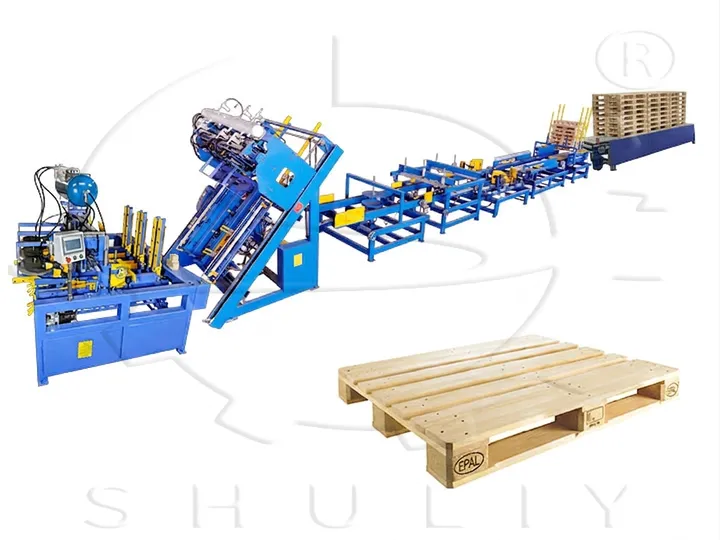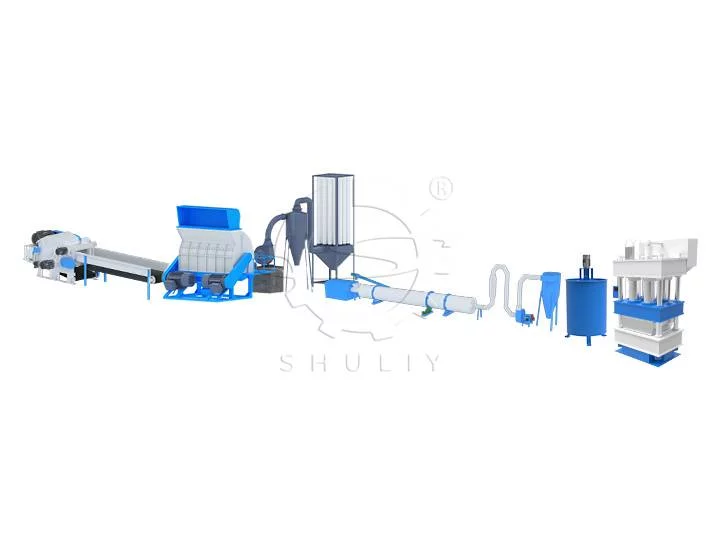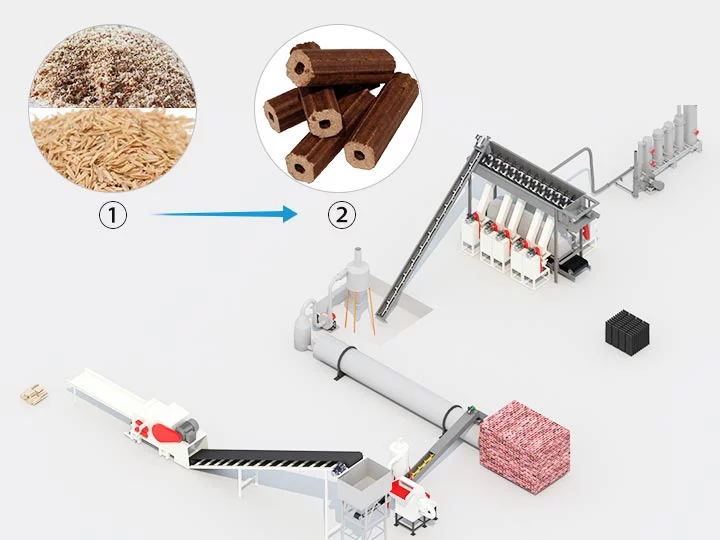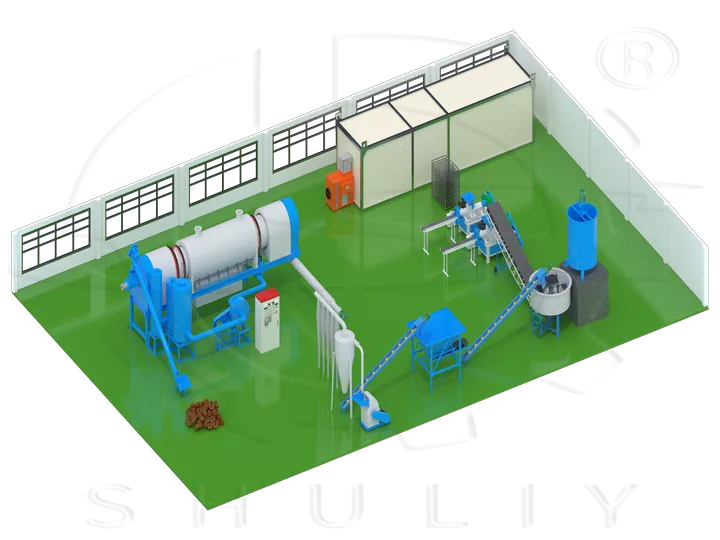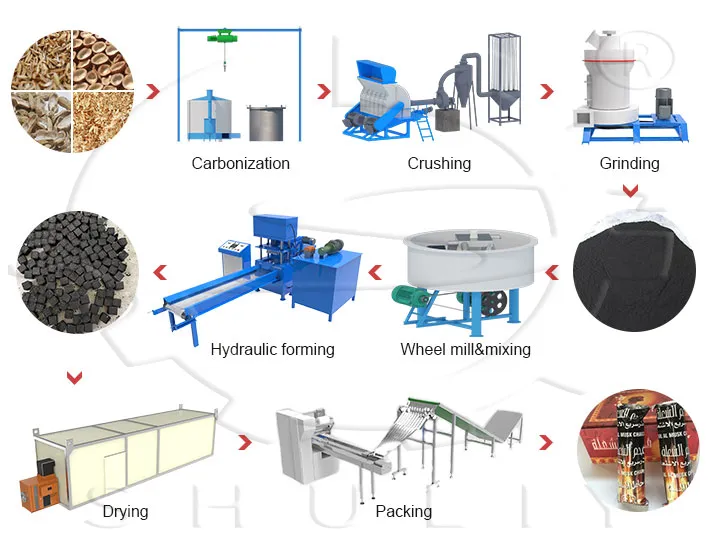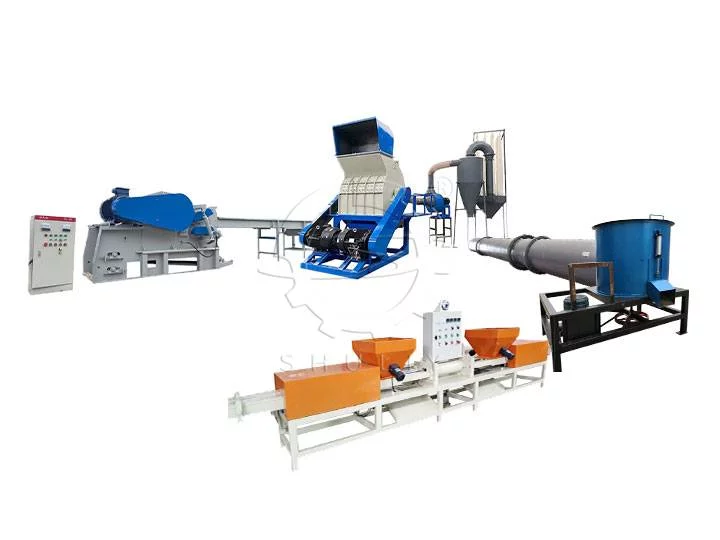
The charcoal production line machine by our company offers a comprehensive solution for transforming wood, wood chips, or other plant-based raw materials into high-density sawdust charcoal briquettes.
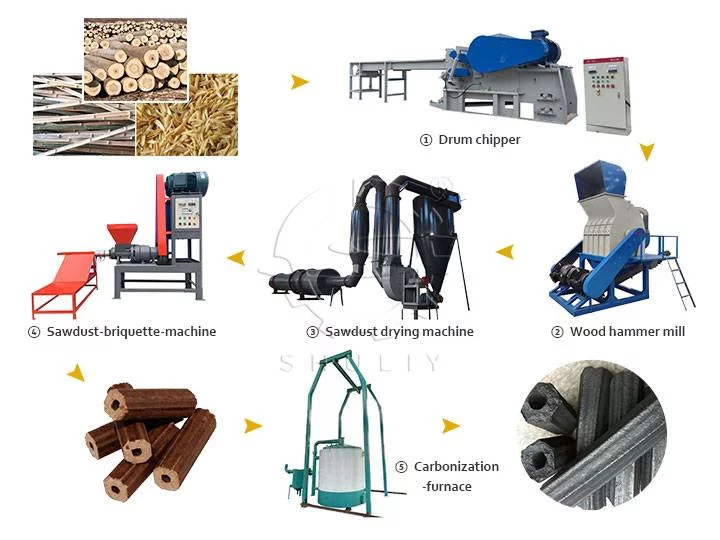
Our charcoal briquette production lines include processes such as crushing, mixing, molding, charring, and drying. We cater to various scales and processing needs. Configurations are available for 1-3t/d, 3-6t/d, and 6-10t/d output capacities.
Each line is equipped with essential machinery such as wood shredders, hammer mills, dryers, sawdust briquette machines, and carbonization furnaces. These charcoal-making units ensure efficient production from raw material preparation to the final charcoal product.
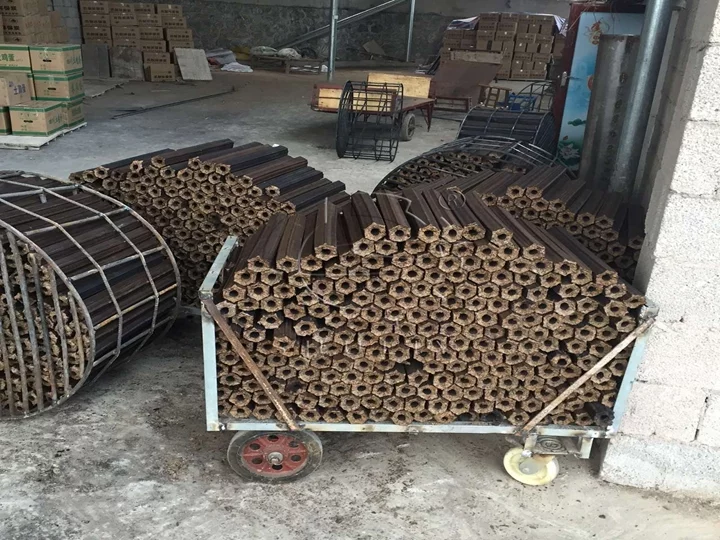
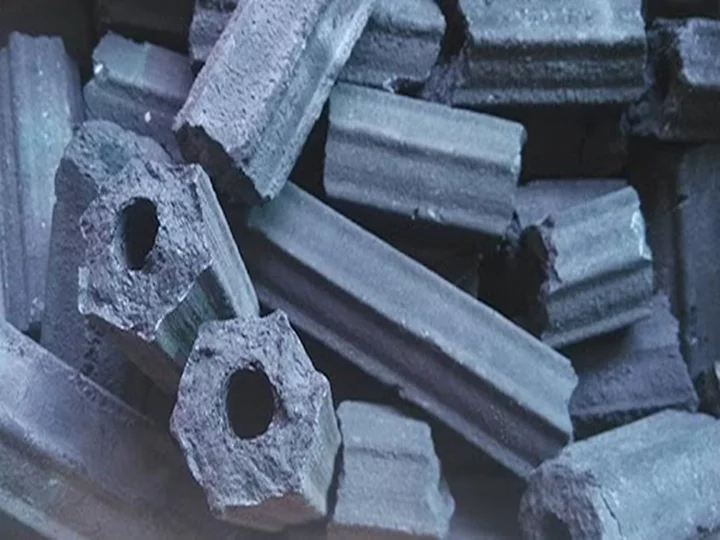
The line accepts wood waste with moisture below 40%. Raw materials include hardwood logs, branches, sawdust, bamboo, coconut shell, and fruit wood. The final product is high-density charcoal briquettes ready for barbecue, shisha, and industrial fuel markets.
As experts in biomass charcoal machines, we specialize in customizable equipment solutions that maximize efficiency. Our reliable charcoal products are suitable for diverse applications.
Raw Materials for the Charcoal Production Line
Understanding the raw materials needed for the charcoal production line is the first step to successful operation.
A charcoal briquette production line utilizes diverse raw materials, commonly including wood logs, bamboo, biomass, agricultural residues, and coconut shells. Each biomass type offers unique characteristics and considerations.
The choice of biomass for charcoal production depends on factors such as local availability, market demand, and specific product requirements for your processing plant.
Next, let’s delve into the working process of the charcoal briquette production line and understand the specifics of each step.
How the Charcoal Making Plant Works: 5-Stage Process
Stage 1: Crushing
The SL-800 wood sawdust machine crushes logs, branches, and wood chips into fine sawdust. Capacity reaches 1,000 kg per hour. The 45 kW main motor drives alloy hammers against an internal screen. A 6-bag dust remover with 1,000 mm diameter keeps the workshop clean. Screen apertures from 0.6 mm to 12 mm control the final sawdust size.
Stage 2: Drying
Wet sawdust cannot form strong briquettes. The SL-D1000 rotary drum dryer reduces moisture from 30–40% down to 8–12%. Capacity matches the crusher at 1,000 kg per hour. The dryer includes a cyclone dust collector, adjustable-speed motor, and independent control cabinet.
Stage 3: Briquetting
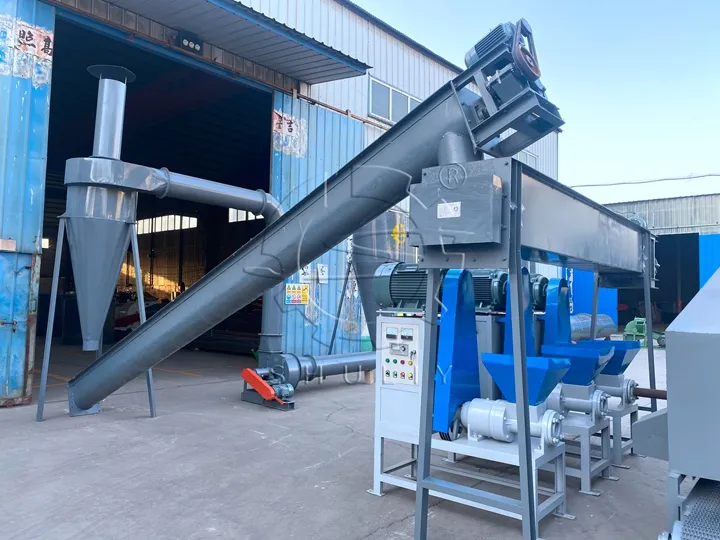
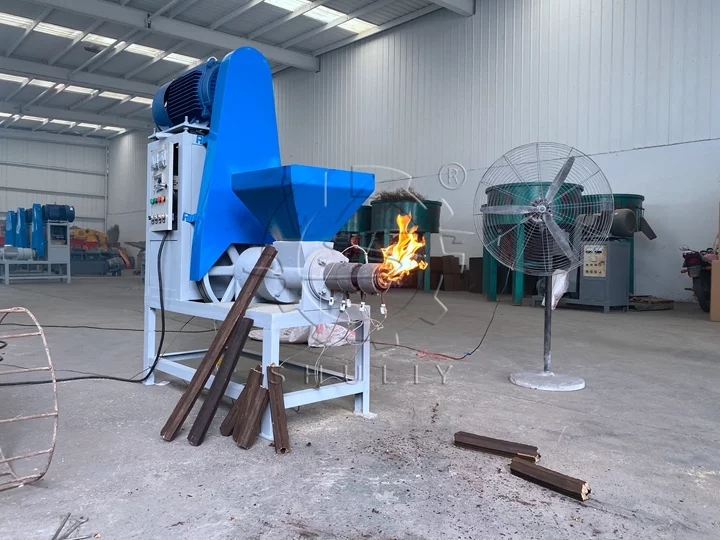
Dried sawdust enters the screw feeder. The feeder distributes material evenly to four SL-50 briquette machines. Each machine produces 200–250 kg of briquettes per hour. High-pressure screw extrusion compresses sawdust into dense rods without any binder. The machines use chromium-manganese alloy molds and C-type belts for longer service life.
Stage 4: Carbonization
Biomass briquettes load into vertical carbonization furnaces. Each furnace processes one batch every 6–8 hours. After the first hour, combustible gases released from the briquettes sustain the furnace heat. No electricity or external fuel is required. Three furnaces working in rotation handle the daily output of the 1 ton/hour briquetting line.
Stage 5: Cooling and Packing
Hot charcoal cools inside the sealed inner stoves. Once at room temperature, the charcoal briquettes are ready for packaging and sale. The charcoal holds the briquette shape, density, and uniform size from the pressing stage.
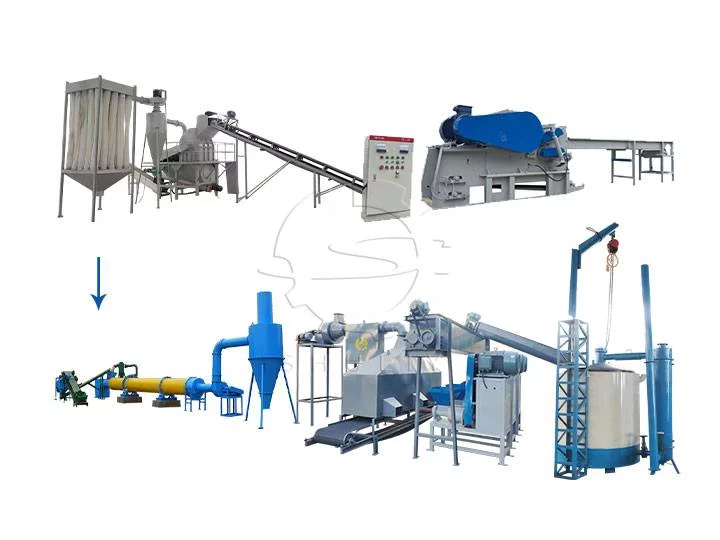
Charcoal Production Line Machine For Sale
After understanding the production process, you might be interested in the necessary equipment. We offer a variety of machines to suit different needs.
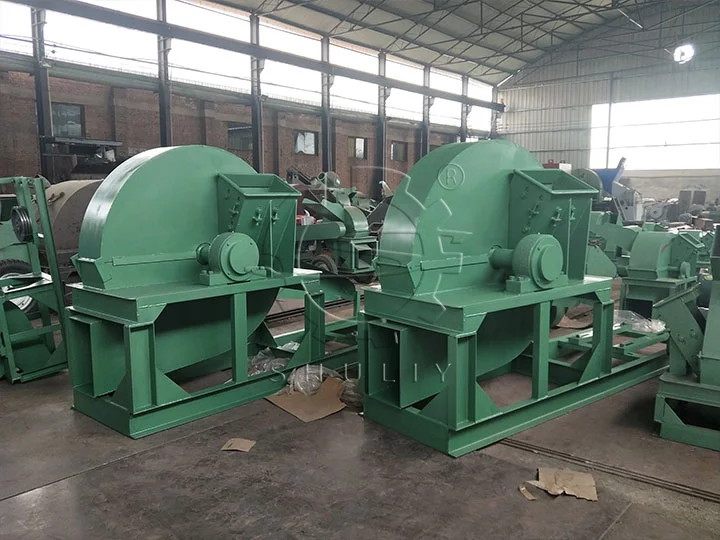
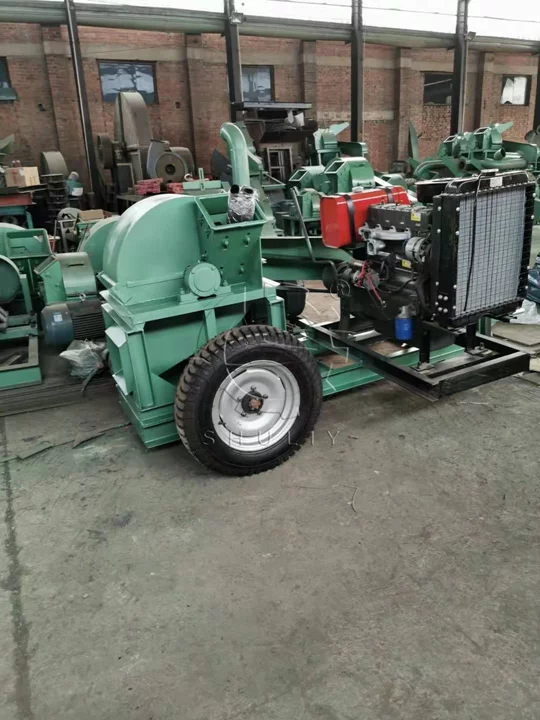
The wood shredder is used to crush raw materials, such as logs or branches, into smaller particles.
- Efficient and uniform shredding, ensuring consistent material size for optimal carbonization.
- High-speed operation, saving time and increasing production efficiency.
- Versatility to handle various types of wood and biomass materials.
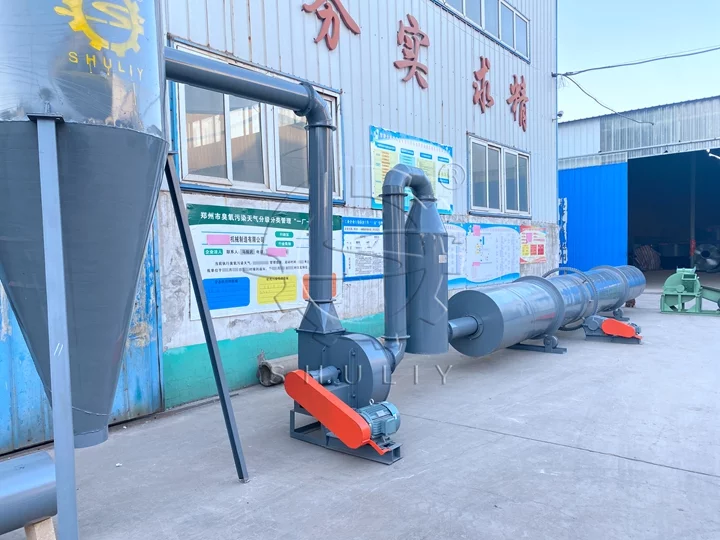
The sawdust dryer is responsible for reducing the moisture content of the raw materials.
- Rapid and uniform drying, ensuring the raw materials are suitable for briquetting and carbonization.
- Energy-efficient operation, reducing production costs.
- Adjustable temperature and drying time for precise control of moisture content.
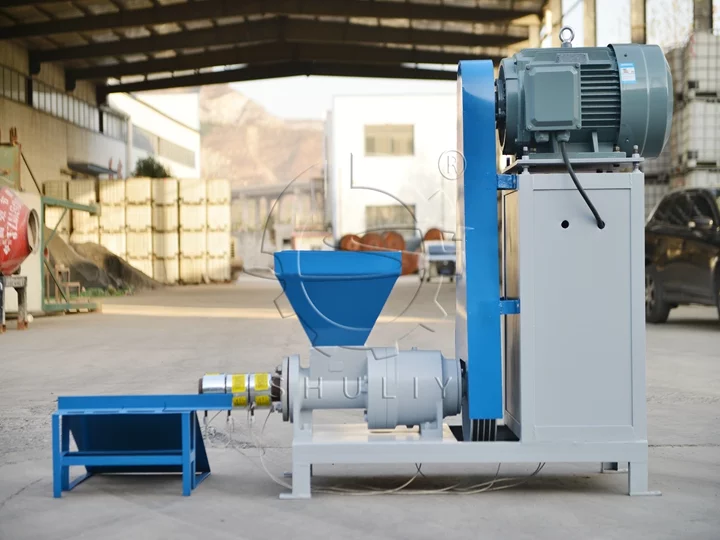
The biomass briquette machine is used to compress the dried raw materials into briquettes of desired shapes.
- Consistent and uniform briquette production, ensuring product quality.
- High pressure and density during briquetting, result in compact and durable briquettes.
- Versatility to work with various biomass materials, offering flexibility in product options.
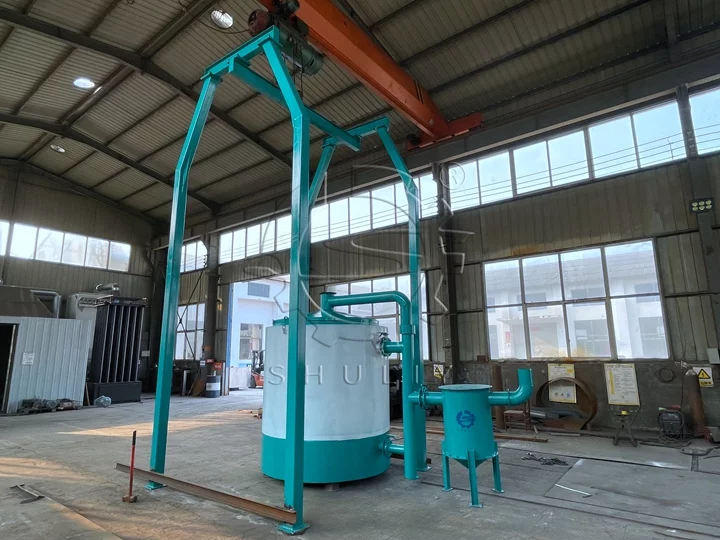
The carbonization furnace is the final stage where the briquettes are converted into charcoal through the carbonization process.
- Controlled heating and oxygen deprivation for optimal carbonization.
- High-temperature insulation, ensuring efficient and thorough carbonization.
- Safety features and emission control mechanisms to adhere to environmental standards.
Charcoal Production Line Equipment List
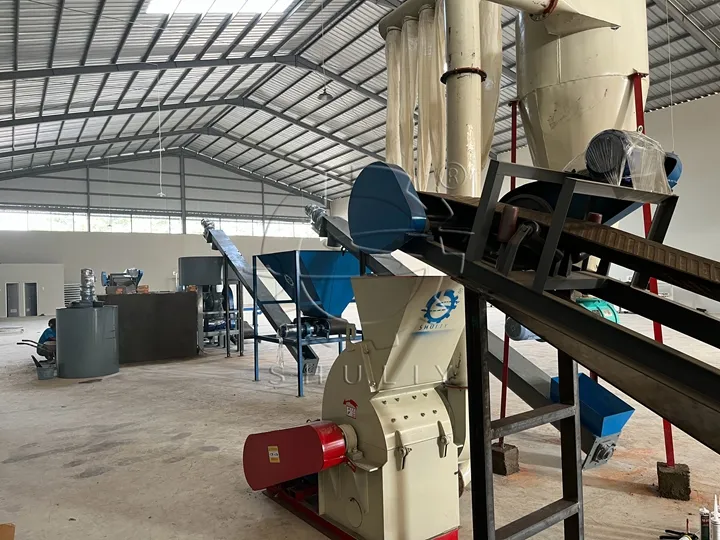
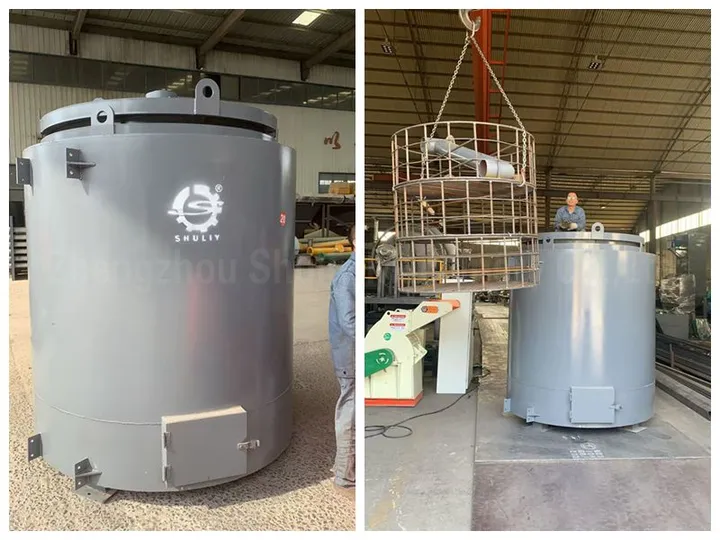
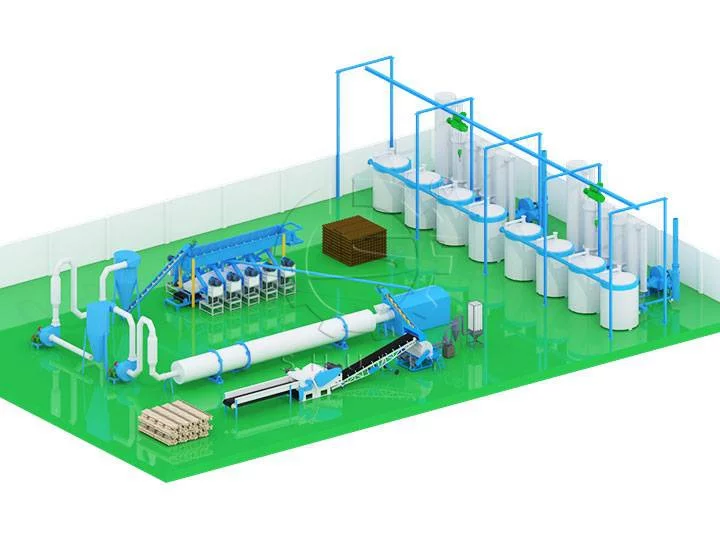
A complete 1 ton/hour charcoal production line includes the following machines:
| Equipment | Function | Power (kW) |
|---|---|---|
| Wood sawdust machine (SL-800) | Crushes wood chips and logs into sawdust | 45 + 7.5 |
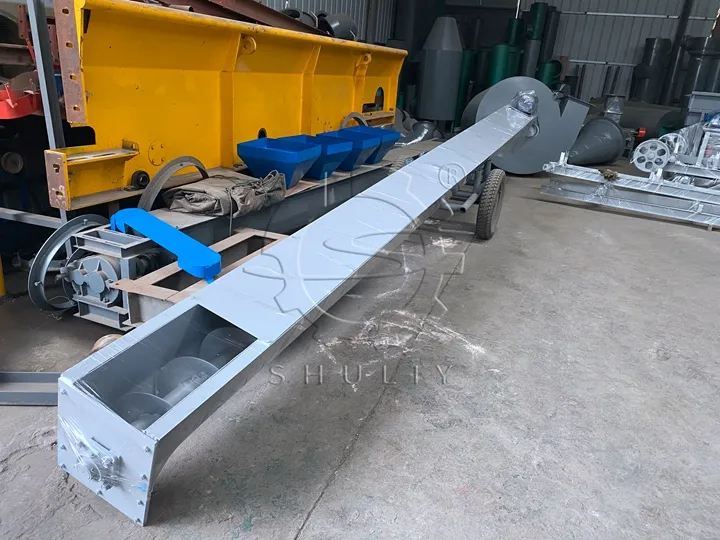
| Screw conveyor (6m) | Transports sawdust to the dryer | 4 |
| Rotary drum dryer (SL-D1000) | Reduces sawdust moisture to 8–12% | 3 + 15 |
| Screw conveyor (4m) | Transports dried sawdust to the feeder | 4 |
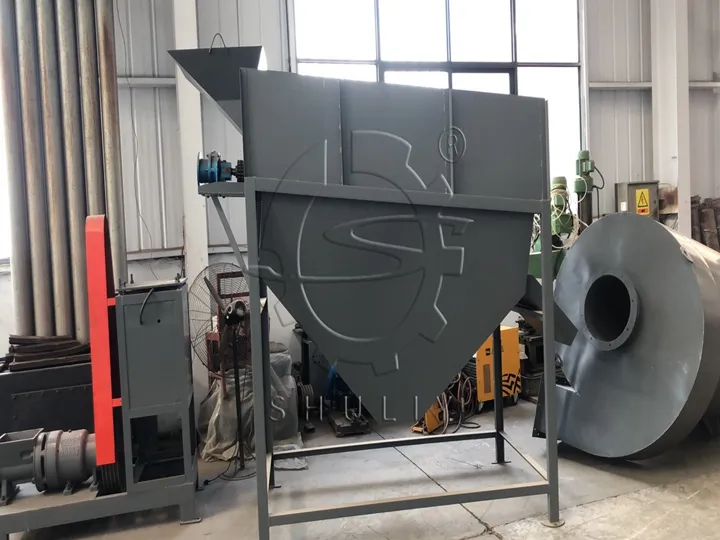
| Screw feeder (SL-4) | Distributes sawdust evenly to 4 briquette machines | 5.5 |
| Sawdust briquette machine (SL-50) × 4 | Presses sawdust into biomass briquettes | 18.5 × 4 |
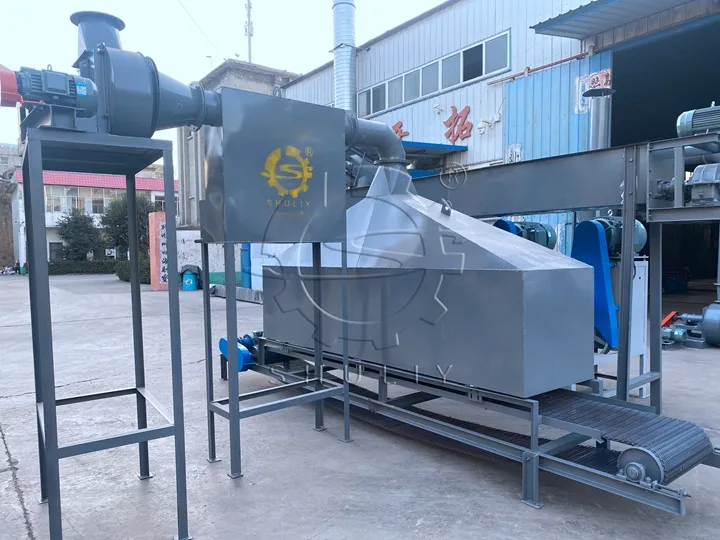
| Smoke collector (SL-4) | Collects and purifies smoke from briquetting | 4 |
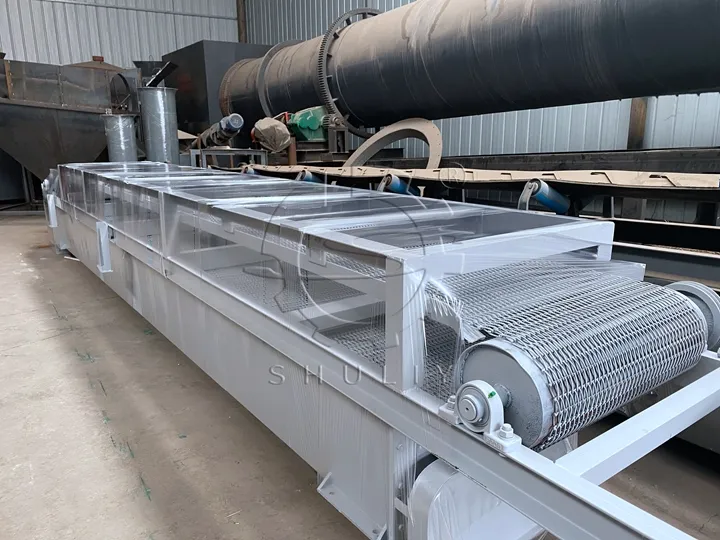
| Belt conveyor | Collects finished biomass briquettes | 1.5 |
| Vertical carbonization furnace × 3 | Carbonizes briquettes into charcoal | 0 (self-sustaining gas) |
- Total working area: 200–300 m².
- Total labor: 3–4 operators per shift.
- Total power (line excluding furnaces): 163.5 kW.
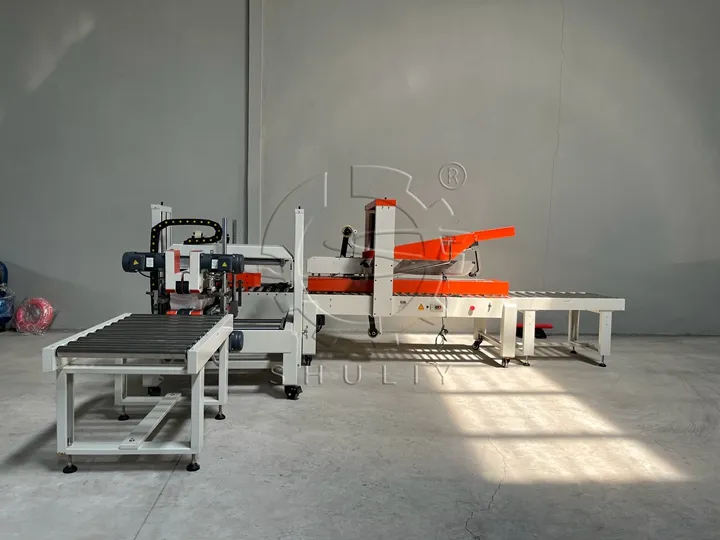
Advantages of The Charcoal Production Line
Wood Sawdust Machine (SL-800)
The crusher is the line’s front end. Its 45 kW copper-core motor handles logs and large branches. An optional large feed inlet accepts tree trunks directly. Spare hammers and screens ship with the machine. Keep hard metals and stones out of the feed opening to protect the blades.
Rotary Drum Dryer (SL-D1000)
The dryer’s 1,000 mm drum runs on 3 kW main power plus a 15 kW fan. Hot air flows through the rotating drum and carries moisture out. The adjustable-speed motor lets you slow the drum for very wet material.
Weight: 2,800 kg.
Sawdust Briquette Machine (SL-50) × 4
Each briquette machine runs on an 18.5 kW national-standard all-copper motor. Key design points:
- 100 cm bearing: more stable feeding and longer bearing life
- U-steel frame: resists deformation under continuous pressure
- Pre-welded screw angle: suits 90% of common raw materials out of the box
- Chromium-manganese alloy mold: extended mold life against abrasive sawdust
The four machines press at the same time. Even if one machine stops for maintenance, the other three keep producing.
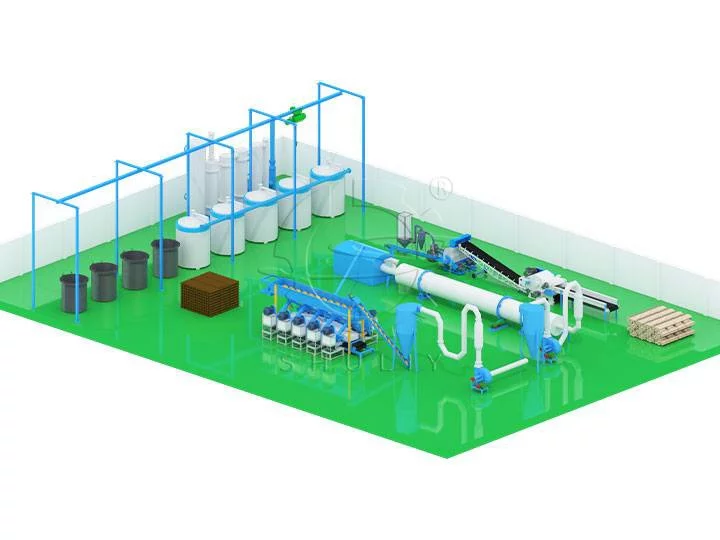
Vertical Carbonization Furnace × 3
The vertical carbonization furnace is the final value-adding stage. Each furnace includes one outer body and three inner stoves. While one stove carbonizes, another cools, and a third loads. This rotation keeps production continuous.
Key parameters per furnace:
| Parameter | Value |
|---|---|
| Batch cycle | 6–8 hours |
| Daily capacity per furnace | 2.5–3 tons of charcoal |
| Inner stove loading | 2,600–3,000 kg per batch |
| Electricity required | None |
| External fuel after startup | 50–80 kg waste biomass per batch |
The sealed chamber produces uniform, low-smoke charcoal. Optional condensers recover wood vinegar and tar as sellable by-products.
Why Invest in This Charcoal Production Line?
- Briquettes sell for more than lump charcoal. Uniform shape, high density, and long burn time command premium prices in barbecue and export markets.
- No electricity for carbonization. The vertical furnaces recycle their own combustible gases. Your electricity bill only covers crushing, drying, and briquetting.
- Modular investment. Buy 1 briquette machine today, add 3 more when orders grow. No equipment becomes obsolete.
- Low labor demand. 3–4 workers run the entire 1 ton/hour line. Automated conveyors remove manual material handling between stages.
- Turnkey delivery. One supplier provides every machine, the layout drawing, and the wiring plan. No compatibility problems between equipment from different factories.
How to Set Up a Charcoal Processing Plant?
Setting up a charcoal processing plant requires thorough planning. Start with market research and a business plan to understand demand and competition. Choose a location near raw materials and transportation, considering environmental regulations. Invest in essential equipment like shredders, dryers, carbonization furnaces, and packaging machinery.
Ensure a steady supply of raw materials and maintain equipment regularly. Comply with local regulations for efficient and sustainable operations. Develop a marketing strategy and establish distribution channels. Train staff on equipment operation, quality control, and safety for a skilled and efficient workforce.
Once the plant is established, understanding the applications of charcoal products will help you expand your market and sales channels.
Charcoal Production Line Application
Industrial manufacturing. Used by industries requiring charcoal for processes such as metallurgy, chemical production, and energy generation.
Agriculture and forestry. Utilized by farmers and forestry operations to convert agricultural waste, wood residues, and biomass into charcoal for sale or personal use.
Commercial use. Employed by commercial enterprises, such as charcoal production plants and manufacturers, to produce charcoal products for retail and wholesale distribution.
Environmental solutions. Adopted by environmental organizations and initiatives focused on sustainable practices and waste management, using biomass waste for charcoal production to reduce environmental impact.
Energy sector. Applied in the energy sector for producing charcoal as a renewable energy source, contributing to energy independence and reducing reliance on fossil fuels.
Research and development. Utilized in research institutions and universities for studying charcoal production techniques, carbonization processes, and exploring new applications for charcoal.
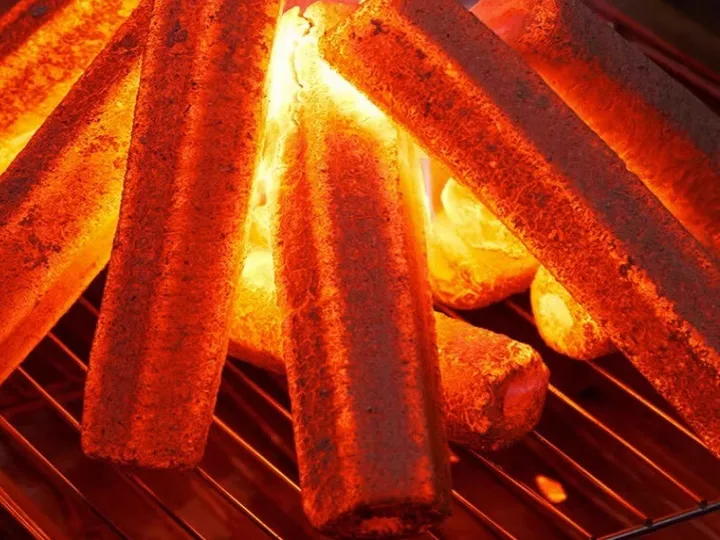
Common Charcoal Production Problems and Solutions
Problem 1: Briquettes crack or break during carbonization.
- Cause: sawdust moisture was too high during pressing.
- Solution: hold dryer output moisture at 8–12% and let hot briquettes cool before loading the furnace.
Problem 2: Dryer cannot keep up with the crusher.
- Cause: raw material is too wet.
- Solution: pre-dry very wet wood in open air for 1–2 days, or reduce crusher feed rate until moisture balance stabilizes.
Problem 3: Briquette machine molds wear fast.
- Cause: sand or stone contamination in sawdust.
- Solution: screen raw material before crushing. Keep chromium-manganese alloy spare molds in stock.
Problem 4: Charcoal output is lower than briquette output.
- Cause: furnaces are the bottleneck.
- Solution: add one vertical carbonization furnace for every 2.5–3 tons of daily briquette production.
Why Choose Shuliy for Your Charcoal Making Plant?
- Complete line from one factory. Shuliy manufactures the crusher, dryer, briquette machines, conveyors, and carbonization furnaces. Every machine is tested together before shipping.
- Layout design included. Send us your workshop dimensions. Our engineers provide a free 2D/3D layout showing machine positions, material flow, and operator stations.
- Wear parts in stock. Hammers, screens, screws, molds, and inner stoves ship within 48 hours. Your line never waits weeks for a spare part.
- 12-month warranty, lifetime support. Machine faults during the warranty period are our responsibility. Technical support continues for the equipment’s entire service life.
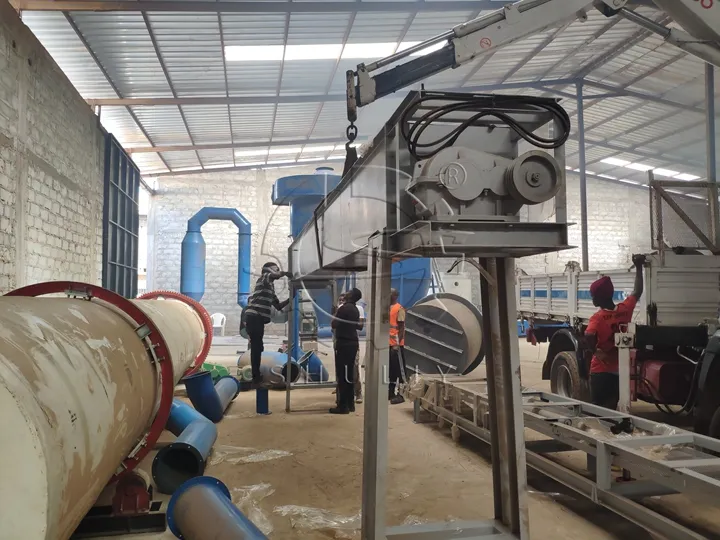
- Flexible installation options. Installation is simple enough for self-installation with our manuals and videos. On-site engineer teams are available for full commissioning and operator training.
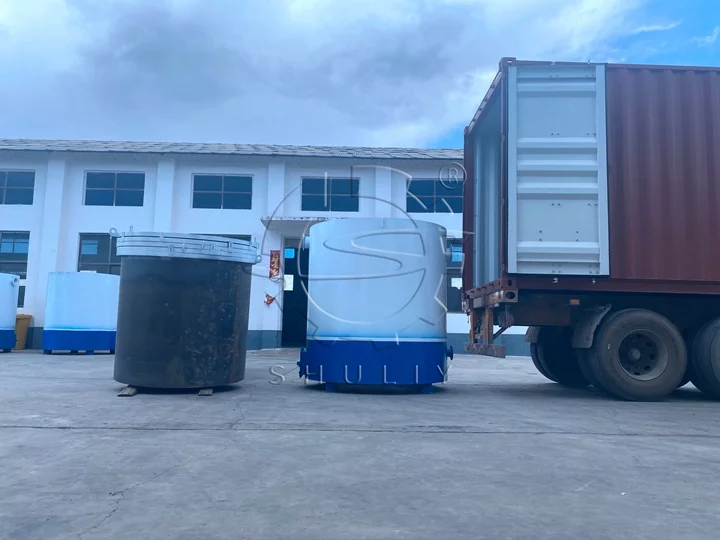
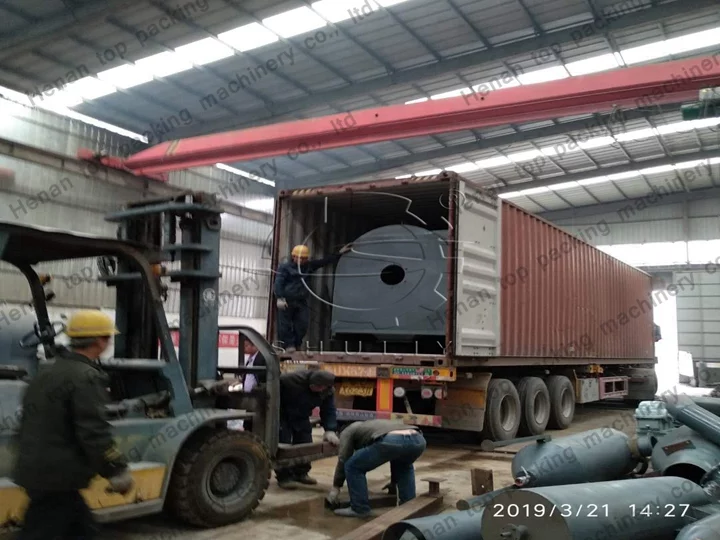
Get a Custom Charcoal Production Line Quote
This charcoal production line turns wood waste into premium charcoal briquettes at 1 ton per hour. Tell us your raw material type, moisture content, and daily output target. Shuliy engineers will recommend the right number of briquette machines and carbonization furnaces, then send a detailed quotation with a layout drawing and shipping schedule within 24 hours.
FAQ
How much charcoal does 1 ton of briquettes produce after carbonization?
One ton of dried biomass briquettes yields approximately 700–800 kg of finished charcoal in the vertical furnace. The briquettes are already compressed and dried before carbonization, so the yield is much higher than carbonizing raw wood directly.
Can this charcoal production line process coconut shell?
Yes. Coconut shell crushes well in the SL-800 machine. However, coconut shell can also be carbonized directly in the vertical furnace without briquetting. Many buyers run both processes in the same plant.
What happens if my raw material moisture is above 40%?
Material above 40% moisture overloads the dryer and reduces line output. Store very wet material in a ventilated area for several days before processing, or add a second drying pass.
Can I start the line without the carbonization furnaces?
Yes. Some buyers sell raw biomass briquettes directly to carbonization plants or boiler fuel markets first. The furnaces can be added later when you are ready to move into higher-margin charcoal sales.
What power supply does the line need?
The line requires a three-phase industrial supply of approximately 165–180 kW capacity. The carbonization furnaces need no electrical connection. A diesel generator set can run the line in off-grid areas.
How long does installation take?
Self-installation with our drawings typically takes 5–7 days with 3–4 workers. An on-site Shuliy engineer team completes installation, commissioning, and operator training in approximately 3–4 days.