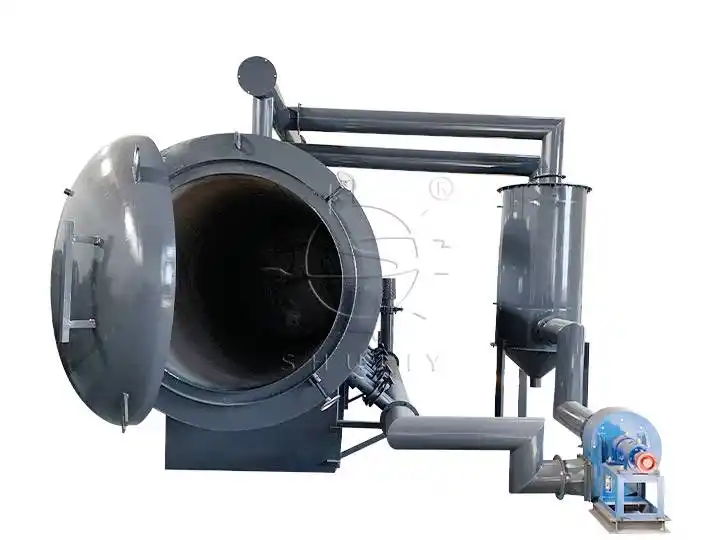
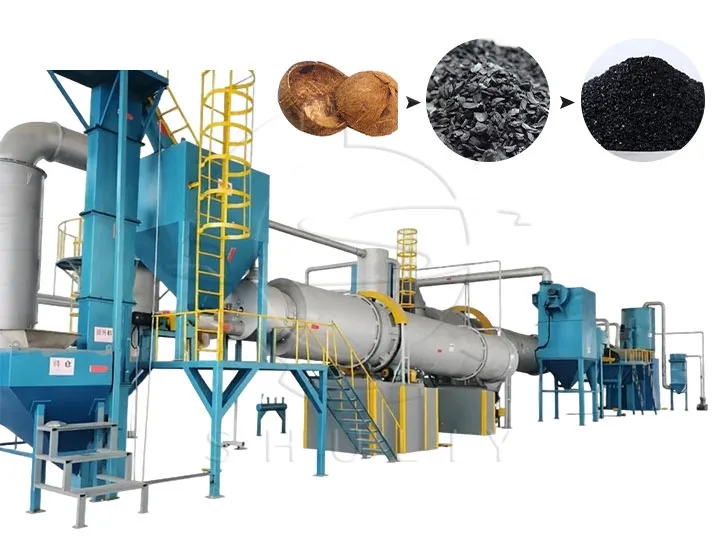
An activated carbon carbonization furnace is a high-temperature rotary furnace. It converts carbonized material into finished activated carbon. This is the core machine in physical activated carbon production.
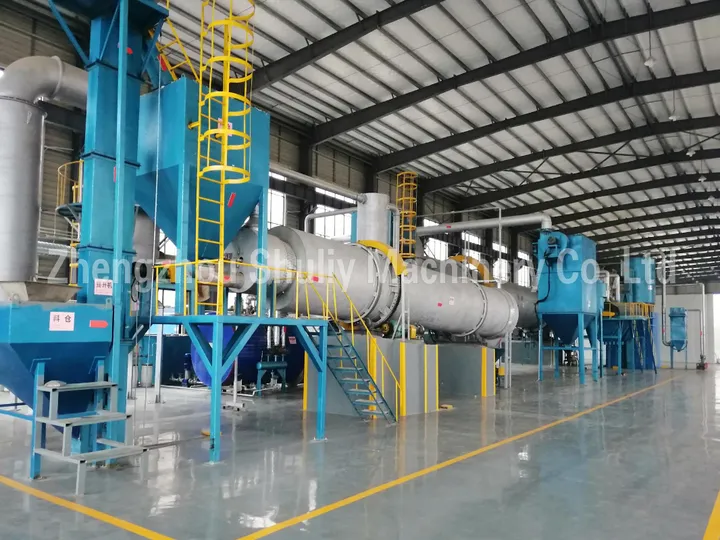
The furnace heats carbonized material to 880–1050°C. Steam is injected into the drum. The steam reacts with the carbon structure. This opens closed pores, creates micropores, and expands some into mesopores. The result is activated carbon with high iodine value and large surface area.
Before this stage, raw biomass must pass through a continuous carbonization furnace. That pre-carbonization step removes moisture, tar, and volatile compounds at 500–800°C. The output is carbonized material. This material then enters the activated carbon carbonization furnace to become finished product.
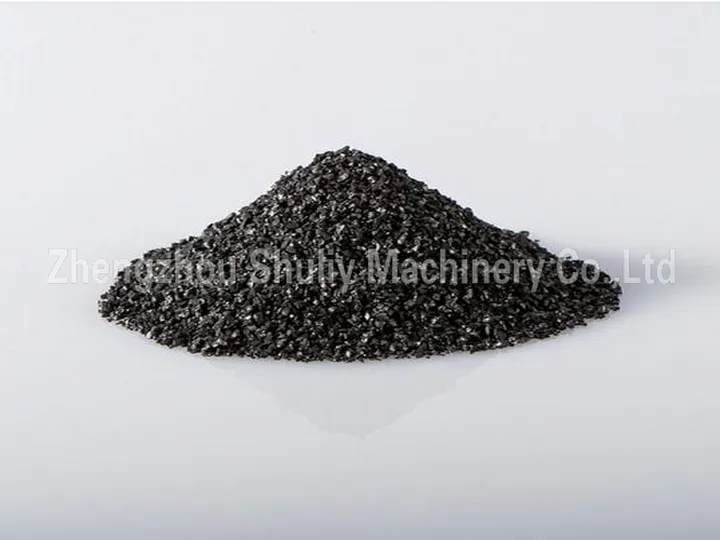
Shuliy supplies two main types of activated carbon production furnaces: internal-heat rotary carbonization furnaces and external-heat gasification continuous carbonization furnaces. Each type matches different raw materials, product grades, and production budgets.
Two Main Types of Activated Carbon Production Furnaces
Internal-Heat Carbonization Furnace
The internal-heat type is a direct-heating rotary carbonizer. Hot flue gas enters the rotating drum and contacts the material directly. Heat comes from external fuel combustion and from the combustion of volatile gases released during pyrolysis.
This design offers high thermal efficiency. It is 30–40% more efficient than external-heat systems. However, flue gas directly contacts the material. This can increase ash content and cause oxidation losses if airflow is not controlled precisely.
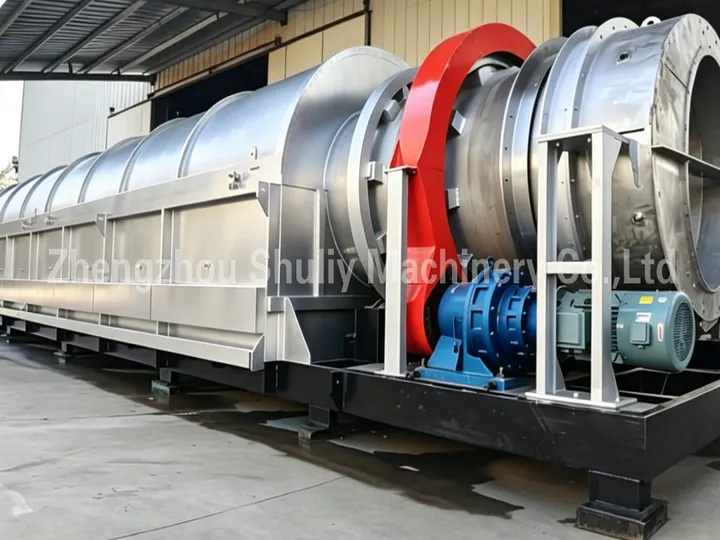
External-Heat Gasification Continuous Carbonization Furnace
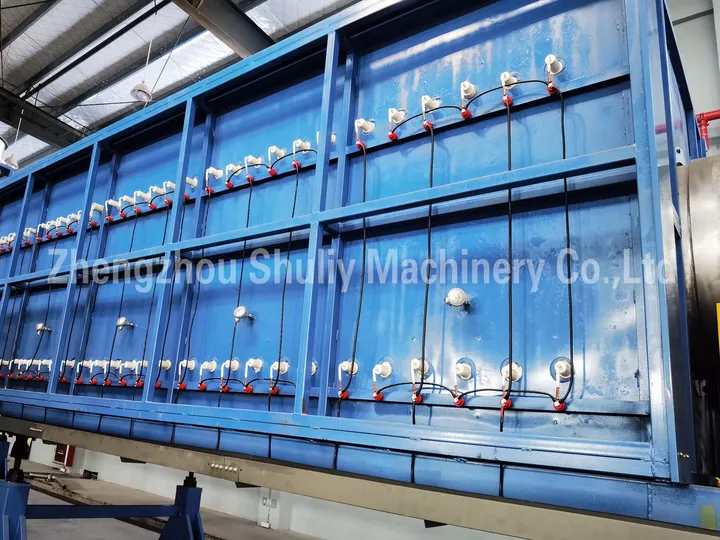
The external-heat type uses indirect heating. The combustion chamber sits outside the drum. Hot flue gas heats the drum wall. The material inside the drum never contacts the combustion gas. The system maintains an oxygen-free environment.
Volatile gases released from the material are collected, purified, and burned in the external combustion chamber. This creates a self-sustaining heat source. External-heat systems produce lower-ash carbonized material with less burn loss. They are ideal for food-grade, pharmaceutical, and high-end adsorption activated carbon.
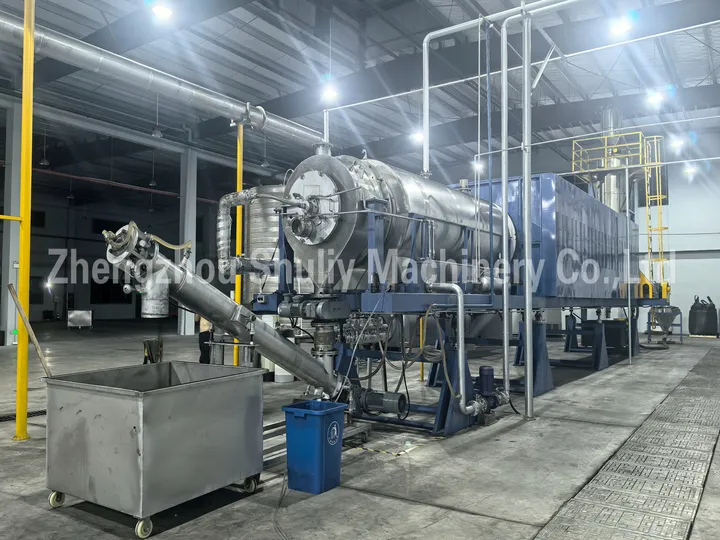
Internal-Heat Activated Carbon Carbonization Furnace Specifications
The following table shows standard internal-heat rotary models for activated carbon production:
| Model | Drum Size (m) | Power (kW) | Capacity (t/day) | Dimensions (mm) |
|---|---|---|---|---|
| SL-1500×11 | Φ1.5 × 11 | 40 | 1–2 | 11,700 × 2,230 × 2,230 |
| SL-1500×15 | Φ1.5 × 15 | 45 | 2–3 | 15,700 × 2,230 × 2,230 |
| SL-2200×18 | Φ2.2 × 18 | 50 | 4–5 | 18,700 × 3,050 × 3,050 |
| SL-2200×22 | Φ2.2 × 22 | 50 | 6–7 | 22,600 × 3,050 × 3,050 |
| SL-2600×22 | Φ2.6 × 22 | 55 | 6–8 | 22,600 × 3,450 × 3,450 |
Key operating parameters:
| Parameter | Value |
|---|---|
| Input material | Carbonized material from pre-carbonization furnace |
| Particle size | ≤30 mm |
| Operating temperature | 880–1050°C |
| Drum rotation speed | 1–2 r/min, adjustable |
| Residence time | 60–120 minutes |
| Activation medium | Steam, CO₂, or hydrogen |
| Steam pressure | Controlled by product target |
| Final product | Activated carbon with iodine value 600–1500 mg/g |
The SL-2200×18 model produces 4–5 tons of carbonized material per day. It runs on 50 kW total power. This size suits medium-scale activated carbon plants processing coconut shell or fruit shell.
External-Heat Carbonization Furnace for Activated Carbon Configuration
A complete external-heat gasification carbonization furnace for activated carbon includes feeding, carbonization, gas purification, and cooling units. The table below lists the standard configuration for one SLJY-1600 production line:
| Equipment | Specification | Power (kW) | Function |
|---|---|---|---|
| Z-type conveyor | 36/18 × 6m | 2.2 | Feeds raw material into storage bin |
| Storage bin | Φ2m × 5m | 3 | Buffer storage, Q235 steel |
| Screw conveyor | Φ325mm × 6m | 4 | Transports material to furnace, variable frequency |
| Flat-port feeder | Φ325mm × 2m | 3 | Sealed feeding, prevents air entry |
| Carbonization furnace main drum | JY-1600 | — | Φ1.6m × 12m, 310S stainless steel, 30mm wall, 310S flights 8mm thick |
| External insulation box | 6m × 2.1m × 2.2m | — | Q235 shell, aluminum silicate modules, fish-scale seal |
| Main operation platform | 10m × 1m × 1.5m | — | 100# channel steel, Q235 |
| Drive system | Φ1750 | 18.5 | Large gear, support rollers, variable-speed motor |
| Inlet/outlet end covers | 2.1m × 0.7m × 2.2m | — | Q235 with aluminum silicate lining, 3-layer seal |
| Furnace head platform | 1m × 1.5m × 1.8m | — | Q235 with checkered plate floor, includes ladder |
| Main frame | 12m × 2.2m × 0.8m | — | 160# channel steel, Q235 |
| Main fan | Y5-47 | 15 | 304 stainless steel, water- cooled bearing, variable frequency |
| Cooling discharge screw | Φ325mm × 6m | 4 | Q235 with water jacket |
| Rotary discharge valve | DN400 | 2.2 | Cast iron |
| Gas supply and exhaust system | Custom | — | Steam pipe, converter, valves, exhaust pipe |
| Water supply and return pipes | Custom | — | Galvanized pipes approx. 100m, water level gauge, alarm |
| Waste heat boiler | 0.5T | — | Provides steam for production, national standard |
| Preheater | 1.5m × 1m × 1m | — | Preheats boiler feed water |
| Spray tower | Φ0.8m × 3m | 2.2 | Cools boiler exhaust gas |
| Rotary carbon cooler | Φ1m × 10m | 8.5 | Secondary cooling of activated carbon, variable frequency |
| Cooling tower | 100T | 2.2 | FRP, cools circulating water for carbon cooler |
| Control cabinet | 1.5m × 0.4m × 1m | — | Andeli brand |
Total power for one carbonization line: 64.8 kW
A full activated carbon plant usually needs four carbonization lines, plus screening and packaging equipment. The total installed power for four lines with screening and packing reaches approximately 271.88 kW.
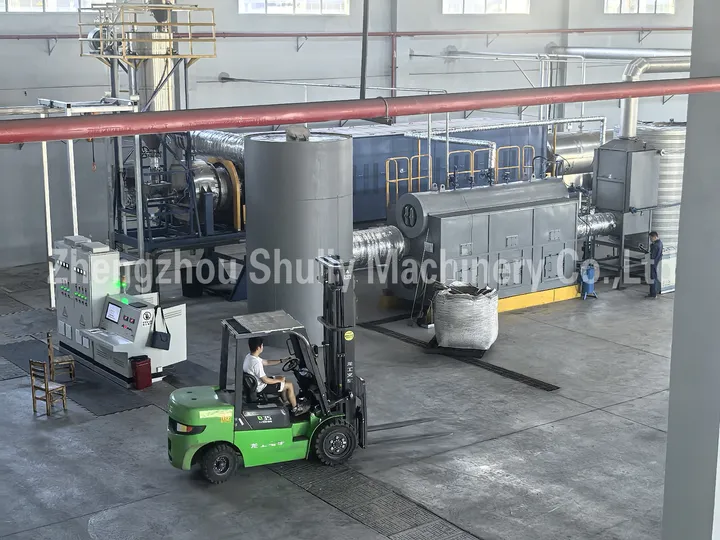
The Two-Stage Physical Activated Carbon Process
Physical activated carbon production uses two thermal stages.
- Stage 1 — Pre-carbonization. A continuous carbonization furnace treats raw biomass at 500–800°C. This produces carbonized material with closed pores and low adsorption capacity.
- Stage 2 — Activated carbon carbonization. The carbonized material enters the activated carbon carbonization furnace. Temperature rises to 880–1050°C. Steam reacts with the carbon. This creates the pore structure that gives activated carbon its adsorption ability.
The second stage is the quality-determining step. Temperature, steam pressure, rotation speed, and residence time control the final iodine value, methylene blue value, and yield.
Stage 1: Pre-Carbonization in the Continuous Carbonization Furnace
The pre-carbonization furnace handles raw materials such as wood chips, rice husk, coconut shell, fruit shells, and straw. Particle size should be ≤30 mm. Moisture content should be below 15%.
This furnace heats the material in an oxygen-limited environment. Volatile gases are released and burned to provide heat. The output is carbonized material with fixed carbon above 75%. This stage is necessary preparation. Raw biomass cannot enter the activated carbon carbonization furnace directly.
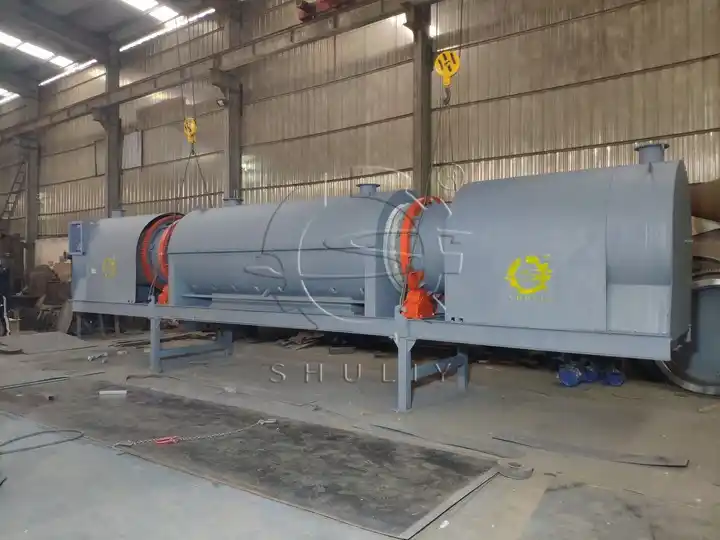
Stage 2: Activated Carbon Carbonization Furnace Operation
What the Furnace Produces
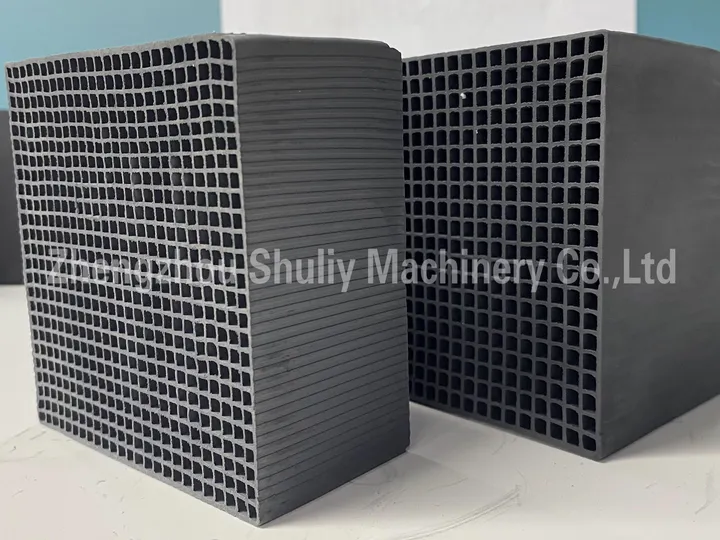
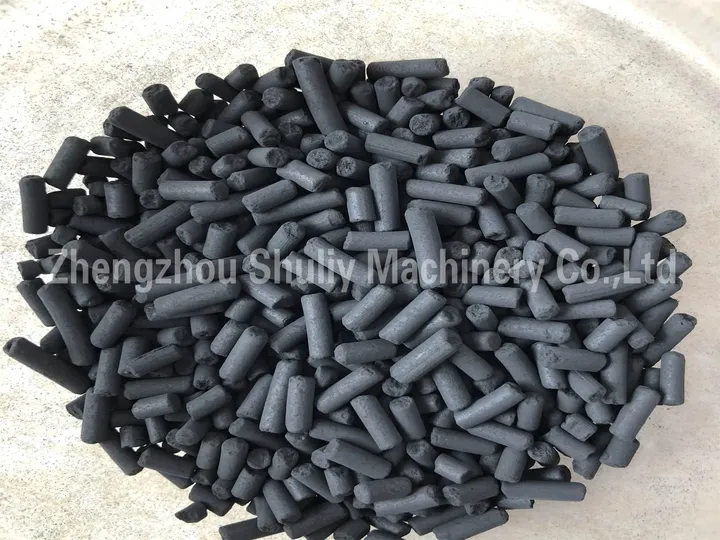
The activated carbon carbonization furnace produces activated carbon with developed pores and high surface area. This product is used for water purification, wastewater treatment, air filtration, food decolorization, pharmaceutical purification, and gold recovery.
Physical Activation Principle
The furnace uses steam as the activation medium. No chemical agents are needed. At 880–1050°C, steam reacts with the carbon structure. This physical method is simpler and cleaner than chemical activation.
The rotary design allows continuous operation. It handles both small batches and large production volumes with lower energy consumption than batch systems.
Three-Stage Pore Formation Theory
- Stage 1 — Pore opening. Steam burns away tar and amorphous carbon. Closed pores from pre-carbonization open.
- Stage 2 — Micropore creation. Selective oxidation generates many micropores. Surface area increases rapidly.
- Stage 3 — Pore expansion. Continued reaction burns pore walls. Some micropores become mesopores. This improves adsorption for larger molecules.
Temperature and particle size strongly affect results. Smaller particles activate faster. Higher temperatures increase porosity but reduce yield.
Raw Materials and Application Fields
An activated carbon making furnace processes many carbon-rich agricultural and forestry wastes:
| Raw Material | Typical Use |
|---|---|
| Coconut shell | Water purification, gold recovery, air filtration |
| Fruit shells (apricot, peach, plum) | Food-grade decolorization, pharmaceutical adsorption |
| Sawdust | Industrial wastewater treatment, chemical adsorption |
| Rice husk | Low-cost water treatment media |
| Straw and stalks | Soil amendment, energy carbon, low-iodine activated carbon |
| Bamboo | High-porosity activated carbon for air and water |
The internal-heat furnace works best with heavy, dense materials such as coconut shell and fruit pits. The external-heat furnace handles light, fine materials such as sawdust, rice husk, and straw without blowing them away with flue gas.
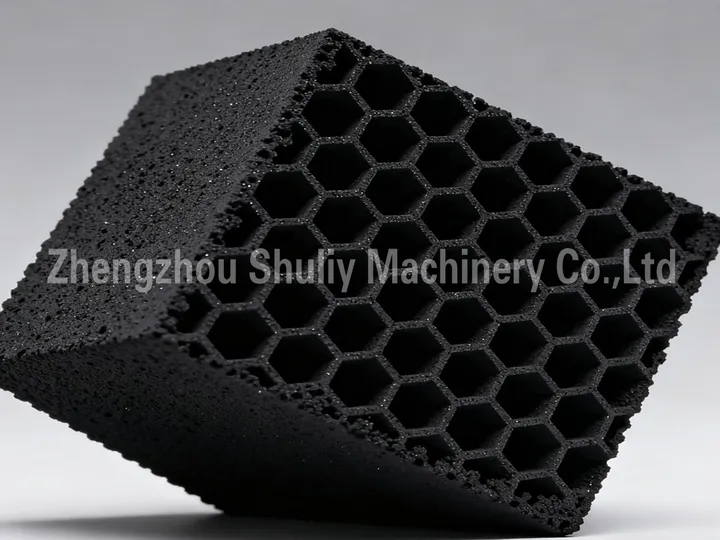
Activated Carbon Carbonization Furnace Operation Standards
Pre-Startup Inspection
Before starting the activated carbon carbonization furnace, check the following:
- Bearings and drive system lubrication
- Thermocouple accuracy and placement
- Boiler water level and pressure
- Fan rotation and airflow
- Steam pipe connections and valve status
- Input material moisture below 15%
- Emergency stop buttons and safety guards
- Electrical control cabinet functions
- Sealing condition at inlet and outlet
Prepare startup fuel such as LPG or natural gas for heating the furnace.
Heating and Feeding Process
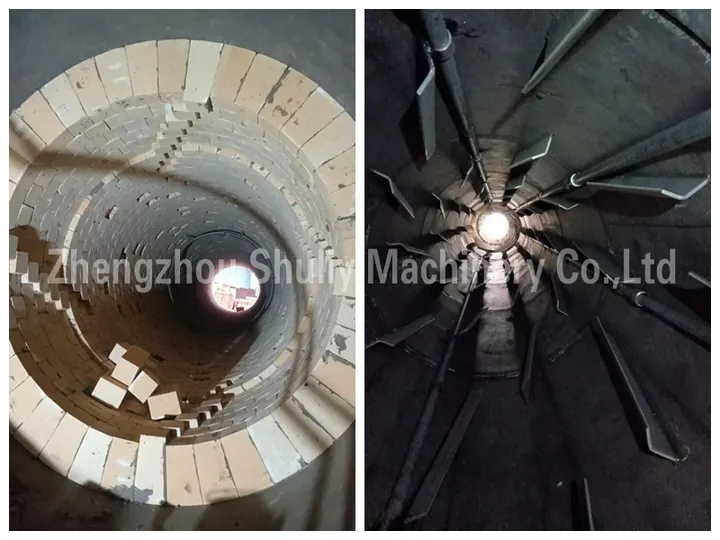
The furnace uses co-current carbonization. The operating steps are:
- Heat the furnace empty. Start the burner and raise temperature.
- Introduce steam at 750°C. Steam conditions the furnace atmosphere.
- Stabilize above 800°C. Wait until temperature is stable before feeding.
- Start feeding slowly. Increase rotation speed and feed rate gradually.
- Reach normal operation. Maintain temperature between 880°C and 950°C.
- Control steam pressure and material layer thickness. These control activation depth and yield.
Product Index Control Schemes
The operating parameters control final iodine value and methylene blue value.
| Target Product | Temperature | Rotation Speed | Steam Rate | Yield |
|---|---|---|---|---|
| Low iodine value (<1100 mg/g) | ≤950°C | Normal | Standard | High |
| Medium iodine value (900–950 mg/g) | 900–950°C | Increased | Standard | Medium |
| High iodine value (1400–1500 mg/g) | ~1050°C | Reduced | High | Lower |
| High methylene blue value | Lower temperature | Standard | Higher steam | Medium |
Higher temperature and longer residence time increase adsorption capacity. They also reduce yield because more carbon burns away.
Troubleshooting
| Problem | Possible Cause | Solution |
|---|---|---|
| Sudden temperature drop | Steam too high or feed too fast | Reduce steam, slow feed, check burner |
| Slow temperature decline | Insufficient fuel or wet material | Check fuel supply, reduce input moisture |
| Large temperature fluctuation | Unstable feed rate or airflow | Adjust feeder speed, balance fan airflow |
| Low iodine value | Short residence time or low temperature | Increase temperature, reduce rotation speed |
| Excessive burn loss | Temperature too high or steam too much | Lower temperature, reduce steam rate |
Internal-Heat vs External-Heat: Which One Should You Choose?
| Comparison Item | Internal-Heat Furnace | External-Heat Furnace |
|---|---|---|
| Heating method | Direct heating, flue gas contacts material | Indirect heating, flue gas separated from material |
| Furnace atmosphere | Micro-oxygen | Oxygen-free |
| Raw material suitability | Heavy particles with bulk density >0.4 | Heavy and light materials, particles ≤30mm |
| Ash content of carbonized material | Relatively high | Low |
| Carbonization burn loss | Higher if airflow is not controlled | Low, carbonization rate ≥95% |
| Thermal efficiency | High, low energy cost | Lower due to wall heat loss |
| Equipment investment | Lower | Higher |
| Environmental performance | Requires exhaust gas treatment | Volatile gas recycled, tar recoverable |
| Product positioning | Standard industrial activated carbon | Food-grade, pharmaceutical, high-end activated carbon |
Choose the internal-heat activated carbon carbonization furnace when you need large-volume, low-cost production of standard industrial carbon. Choose the external-heat type when product purity, low ash, and low burn loss are priorities.
Common Production Pain Points and Solutions
Pain point 1: Input material quality is inconsistent.
Solution: Ensure pre-carbonized material comes from a stable continuous carbonization furnace. Control particle size and moisture before feeding.
Pain point 2: Final iodine value is too low.
Solution: Increase furnace temperature, reduce rotation speed, or increase steam rate. Monitor changes batch by batch.
Pain point 3: Excessive burn loss reduces yield.
Solution: Lower temperature or reduce steam flow. Balance adsorption capacity against yield based on market requirements.
Pain point 4: Temperature fluctuations cause off-spec product.
Solution: Check fuel supply stability, feed rate consistency, and steam pressure control. Use automatic temperature control if available.
Pain point 5: Hot activated carbon ignites after discharge.
Solution: Use a water-jacketed cooling screw or rotary cooler. Keep the discharge path sealed from air.
Why Choose Shuliy?
- Custom furnace design. Shuliy engineers select internal-heat or external-heat configuration based on your raw material, target product grade, and daily output target.
- High-temperature materials. Our external-heat furnaces use 310S stainless steel for the drum and lifting flights. This material resists corrosion and deformation at 800°C.
- Full system supply. We provide not only the carbonization furnace but also feeding conveyors, gas purification systems, cooling equipment, control cabinets, and waste heat recovery boilers.
- Installation and training. Our technicians install and commission the equipment at your site. Operators receive training on temperature control, feeding rate adjustment, and maintenance schedules.
- 12-month warranty. All mechanical and electrical components are covered. We also provide lifetime technical support and fast spare parts supply.
FAQ
What is the difference between a carbonization furnace and an activation furnace?
A pre-carbonization furnace treats raw biomass at 500–800°C to remove volatiles. An activated carbon carbonization furnace treats carbonized material at 880–1050°C with steam to create adsorption pores.
Can raw biomass enter the activated carbon carbonization furnace directly?
No. Raw biomass must first pass through a pre-carbonization furnace. The output carbonized material is the correct input for the activated carbon carbonization furnace.
How does steam create pores in the carbon?
Steam reacts with carbon at high temperature. It burns away tar and amorphous carbon. This opens closed pores, creates micropores, and expands some into mesopores.
Why does higher temperature reduce activated carbon yield?
Higher temperature burns more carbon. More pores form, and iodine value rises. However, less solid material remains as finished product.
How do you control the iodine value?
Control furnace temperature, steam flow, drum rotation speed, and material residence time. Record operating data for each batch to achieve consistent results.
What fuel does the furnace use?
During startup, LPG or natural gas heats the furnace. During normal operation, the system can burn recovered combustible gases to reduce external fuel consumption.
Get a Quote for Your Activated Carbon Carbonization Furnace
The activated carbon carbonization furnace is the core machine that determines the quality of your final product. Its temperature control, steam system, and residence time directly affect iodine value, methylene blue value, and yield. Shuliy supplies complete carbonization-to-activation lines with installation support and operator training.
Contact us today with your raw material type and target daily output. Our engineering team will recommend the right furnace model and prepare a detailed quotation.